
Recently, Mediavine, a leading ad management firm, terminated publisher accounts for overusing AI-generated content—particularly of low quality.
With Mediavine taking this stance, I decided to test BypassGPT, a tool that claims to humanize AI-generated content so it can pass AI detectors. I don’t think any of my sites are at risk (we do a lot of human editing and adapting), but I was curious.
Is a tool like this actually worth your time? Does it even matter? Here is what I found:
Quick Navigation
Step 1: Generating the Article
I started with a baseline—using Cuppa to generate an article titled Top 10 Ways to Make Money Online in 2024. As expected, Cuppa delivered the article in minutes, and when I ran it through Originality.ai, it flagged the piece as “Likely AI” with 100% confidence.
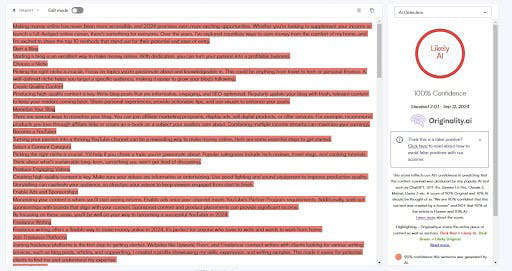
This is where BypassGPT comes in. The tool promises to take AI-generated text and transform it into human-like content that bypasses AI detectors like Originality.ai, GPTZero, and Turnitin.
Step 2: Putting BypassGPT to the Test
Within BypassGPT, there are three main options:
- Bypass AI
- Undetectable AI
- AI Humanizer
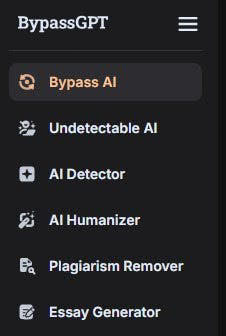
Let me just say upfront—I’m not entirely clear on the differences between these three modes (and BypassGPT doesn’t do a great job explaining them). So, I ran my Cuppa-generated article through all three.
Bypass AI
Super easy to use—copy/paste the text, hit generate.
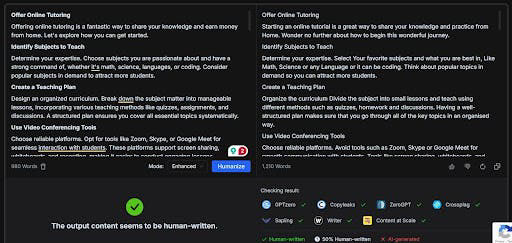
But here’s where it gets weird:
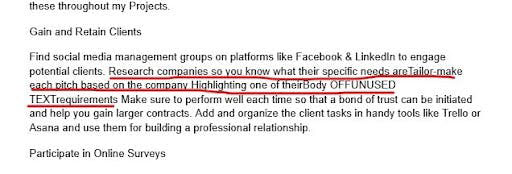
- Contradictions: BypassGPT often altered simple facts. For instance, where the original article recommended tools like Zoom or Skype, BypassGPT recommended avoiding them altogether.

- Offensive language: It randomly inserted phrases like “getting sh*% done on time,” which doesn’t belong in a professional context.
- Awkward phrasing: The tool occasionally added weird capitalization and jarring sentences.
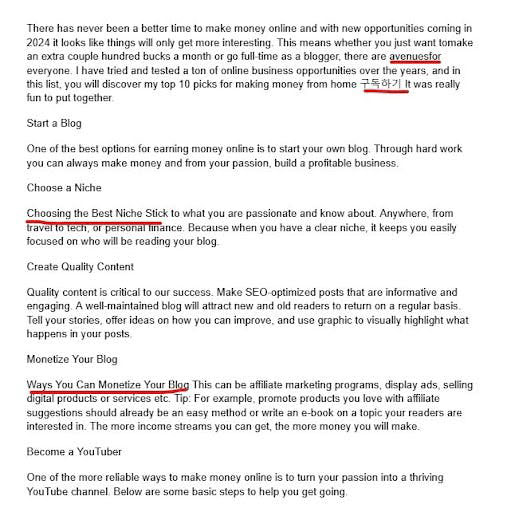
Undetectable AI
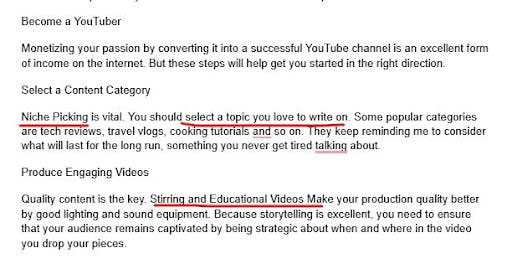
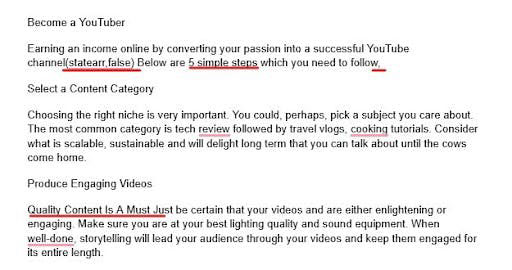
The second mode generated longer sentences, but the tone became… awkward. In one section about becoming a YouTuber, the rewrite was so off that it felt like a completely different topic.

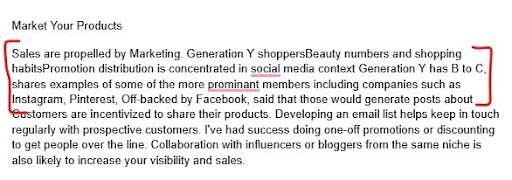
Here’s another example from the marketing section: sentences became bloated, and while it technically passed AI detectors, it didn’t read well.
AI Humanizer
This option was the most readable, but still, random words popped up throughout. Commas were used instead of periods in some places, and there were factual errors.
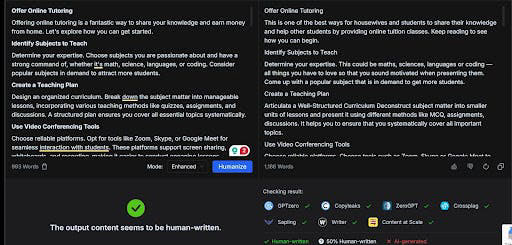
In one instance, it referenced “5 simple steps” when there were only 3 in the actual article.
Step 3: Running the Results Through AI Detectors
Next, I wanted to see how these versions would perform against AI detection tools. Here’s what I found:
Bypass AI: 99% Likely Original
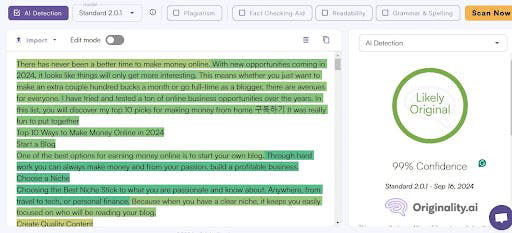
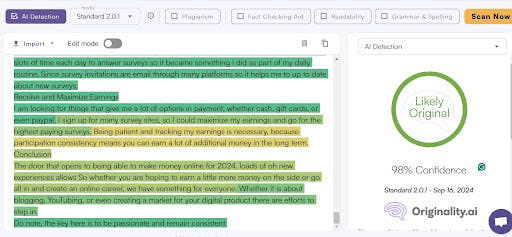
Undetectable AI: Likely Original, 98% Confidence
AI Humanizer: Likely Original, 73% Confidence
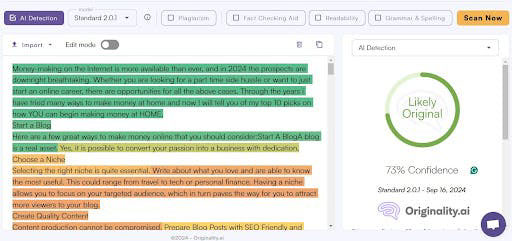
The first two scored well, but the AI Humanizer output fell noticeably short. The results suggest that BypassGPT can successfully trick AI detectors—but the quality of writing is often poor.
Step 4: Editing the BypassGPT Article
I decided to edit the version that had the 99% confidence score from Bypass AI. I used Grammarly and manual tweaks to clean up phrasing, fix contradictions, and remove awkward sentences.
Then, I ran it through Originality.ai again. And here’s the kicker: after my edits, Originality.ai flagged the article as 60% Likely AI—despite the manual efforts to humanize it.
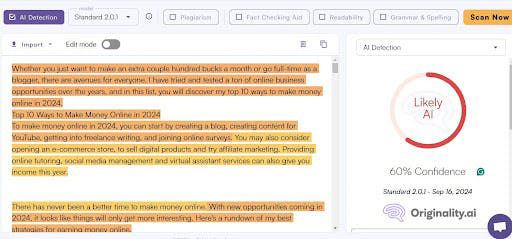
This threw me for a loop. It seems the more I polished the article, the more “AI-like” it became in the eyes of the detector.
Are you surprised?
Conclusion: Should You Use BypassGPT?
This brings me to the final question: Is BypassGPT worth it? From my very, very limited testing…
- If I needed to bypass AI detectors and didn’t care about quality, then yes—BypassGPT would work. It seems to trick the detectors, and get a “Likely Original” score.
- However, quality matters to me, and I don’t want to spend time heavily editing content to get it back to readable, so I wouldn’t recommend it*. I ended up fixing more than it’s worth, and in some cases (as my test showed), my manual edits might actually reduced my chances of passing AI detectors.
*Obviously, this is based on very limited testing! This article is me sharing what I found, not giving you a statistically significant result.
Final Thoughts: Why This Matters
Mass published AI still mostly lacks the details that make content interesting and compelling, which is why I continue to rely on AI writers for base content creation only.
Given what just happened, it was the perfect time to test some of these tools. I picked one that was recommended to me. It worked… but obviously I wasn’t sold on the end result.
The good news is that I don’t put much stock in passing AI detectors, one way or another. I look at user metrics like engagement and time on page to determine if my content is good.
Hopefully the only people that should be worried about getting kicked out of ad networks are those creating scaled mass content.
If you’re publishing good content for your readers, with AI or without, it doesn’t seem (to me) like a tool like BypassGPT will help.
The jury is out on if it helps straight AI content. Clearly it can help it pass AI detection, but at what cost to the readability?
Let me know your thoughts—have you tried tools like BypassGPT? Do you think passing AI detectors alone is enough?