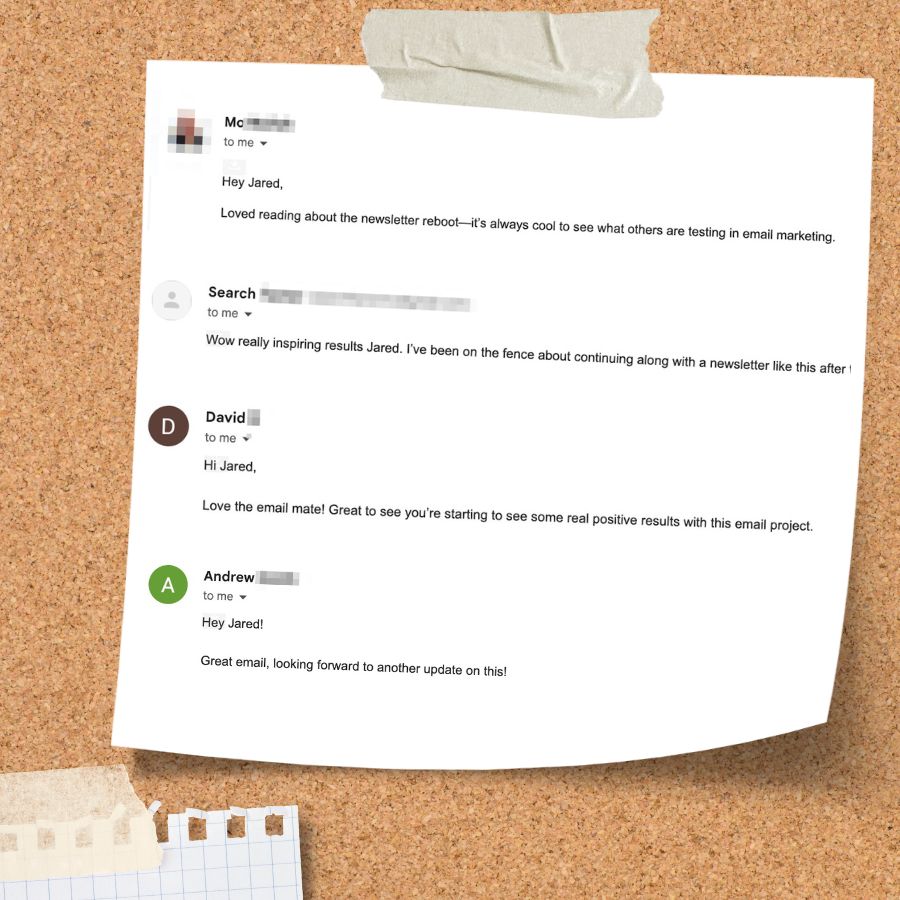
Our recent email struck a chord. Probably because so many people are left holding the bag on at least one or two websites.
In a world where Google updates can crush months (or even years) of SEO work, owning your own email list is one of the smartest things you can do for your business in 2025.
So I decided to go through all of my email marketing blog posts and emails from 2024, and put together this guide for you.
This email guide is the result of everything I’ve learned. I’m going to walk you through exactly how I started, grew, and monetized my email newsletters—and how you can do the same in 2025.
Here’s the step-by-step:
Quick Navigation
- 1. Pick a Niche That Follows These Parameters
- 2. Choose the Right Email CRM (Without Overcomplicating It)
- 3. Create a Lead Magnet That Actually Solves a Problem
- 4. Set Up an Autoresponder Sequence (Don’t Skip This!)
- 5. Automate for Consistency (But Keep It Personal)
- 6. Monetize Your Newsletter (Start Small)
- 7. Test, Tweak, and Optimize for Long-Term Growth
- 8. Scale Your Newsletter (Fast!)
- 9. Stay Consistent (The Long-Term Game)
- Final Thoughts
1. Pick a Niche That Follows These Parameters
It sounds obvious, but it’s worth repeating: pick a niche that you care about.
If you are using a site you already own… well, you can just skip to #2. Or, maybe this one is important for you as well.
You’re going to be spending a lot of time creating content for this newsletter, so it’s important to choose something that excites you. Or, at the least, isn’t totally boring for you.
But don’t just pick something you like—pick something with real long-term potential.
Choose a niche with long-term monetization potential. Most of the niches I am focusing on right now are high RPM topics. Here’s a good article to give you some context on this. This means that I earn more from my efforts.
Here’s my rough, back of the napkin RPM guide:
- Under $10: bad
- $10-$20: not very good
- $20-$30: average
- $30-$30: above average
- $40-$50: good
- $50-$60: great
- $60+: phenomenal
One of my email newsletter niches is at $53 for the past 30 days.
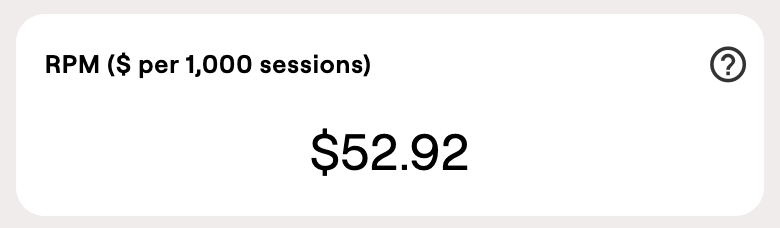
Another one is above $70!
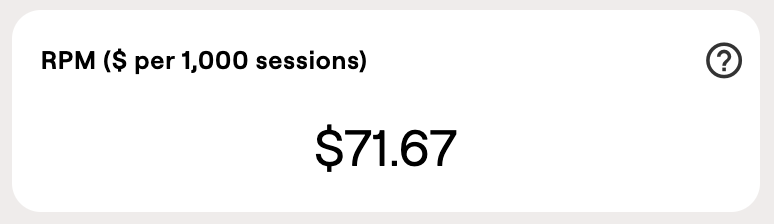
Note that this time of year (Q4) is typically the highest paying time for RPMs, so these are inflated a bit. But still…
Here’s a good article from my friend Jon on what is a good RPM.
2. Choose the Right Email CRM (Without Overcomplicating It)
Once you’ve picked your niche, it’s time to set up your tools. This doesn’t have to be a complicated process, but using the right software will save you hours of work down the road.
Here’s what I recommend:
- Email CRM: I personally recommend ConvertKit. It’s free for up to 10k subscribers, and their automation features are top-notch. If you’re more focused on a personal newsletter, Beehiiv is a great alternative that’s simpler to use. And, MailerLite is a great option too.
I broke down the pros and cons of MailerLite, ConvertKit, and beehiiv to help you choose the best platform for your needs.
- MailerLite is perfect for beginners, offering affordability and ease of use.
- ConvertKit shines for creators looking to build advanced automations and monetize their audience, though it’s pricier.
- beehiiv strikes a balance with strong segmentation, user-friendly design, and great monetization tools like ad networks. Great for a personal brand.
Whether you’re just starting or scaling your list, my long, in-depth guide highlights exactly what each platform offers so you can make the best decision for your use case.
It’s a pain to switch in the future… so that’s why it’s important to get it right.
And if you’ve been sitting on this step, my agency can set it up for you!
3. Create a Lead Magnet That Actually Solves a Problem
Nobody’s going to give you their email address without something of value in return. That’s where a lead magnet comes in—a free resource that helps your audience solve a real problem.
For one of my email newsletters, I created a free PDF titled “50 Free Blah Blah Blah”. The beauty of this lead magnet was that it was directly tied to my niche, and it provided a clear, actionable benefit.
This is a little played out but still effective.
But here’s the thing—not all lead magnets are created equal. When I built my local newsletter, I created a highly specific lead magnet focused on local businesses and community resources.
I haven’t put much effort into my local newsletter, but my podcast co-host Brooks Conkle has been getting amazing results on his in 2024. I asked him for a few things he’s excited about for 2025 and local newsletters:
Local newsletters are a major shift in local media. Every town and city will have local creators sharing events and news businesses coming to town. There are tons of benefits you can select from:
- You can ‘become known’ in your city (if you want), you can do cool trades, you can get sponsors and run ads in your newsletter.
- You can even produce events
- You can start your own local service business and have the perfect outlet to advertise it!
If you want weekly content on growing a local newsletter, give Brooks a follow like I do.
For one of my content sites, I’m launching a free digital download for another email newsletter I’ve been growing (the one I shared last week). I’m VERY confident that it will perform better than the free PDF’s.
The more valuable the offer, the better tied to your audience it is, the better it will convert. This maximizes your new leads and saves you money (if you’re paying for traffic or leads).
4. Set Up an Autoresponder Sequence (Don’t Skip This!)
Once someone subscribes to your list, don’t leave them hanging. You need to follow up immediately with a series of emails that introduce your best content and start building a relationship.
Start by writing a Welcome Email that sets expectations, tells your story, and provides a few of your best resources. Then, follow it up with 10-20 automated emails that nurture your relationship with your subscribers.
If you’re working off of a website with lots of content on it, this should be easy.
You don’t have to make it this long… but consider following this process:
- Immediately set up your Welcome Email
- For the next several weeks or months, every time you send out a Blast-style email, add it to your autoresponder sequence
Now, for this to work, your emails need to be “evergreen”, meaning they’ll work in the weeks to come.
My agency will set up your email CRM (#2), create your lead magnet (#3), and set up a basic autoresponder sequence (#4) as part of one, simple package for you 🙂 You can learn more HERE.
Real-Life Example: For one of my newsletters, I used blog content to create a 20-email autoresponder sequence. Each email had a call to action to drive traffic back to my website, where I earn ad revenue. It was a simple, effective way to keep people engaged without creating new emails every week.
5. Automate for Consistency (But Keep It Personal)
I get it: writing email after email can burn you out. But here’s the good news: most of this can be automated without losing the personal touch that makes your newsletter feel authentic.
Here’s what I automate:
- Welcome Sequences that run automatically, ensuring that every new subscriber gets a great first impression.
- Evergreen Email Sequences that continuously deliver value over time. Once set up, you can sit back and watch it work for you.
- Content Curation Automation: Use tools like Feedly and Zapier to automatically gather content for your newsletters. This way, you never run out of fresh ideas, even during busy weeks.
Again… you kind of have the fast track if you’re working with an HCU hit site. You’ve got the content, just organize it into the right email series!
Once you find what works, use an AI writer tool like Koala to scale out future content. I’m experimenting with this and, so far, it’s working really well.
Pro Tip: Use ConvertKit’s link triggers to segment your audience based on what they click. This allows you to send hyper-targeted emails that increase engagement and revenue potential.
6. Monetize Your Newsletter (Start Small)
Once your list is growing, it’s time to start thinking about monetization. There are several ways to make money with your email newsletter, but don’t try to do it all at once. Start with one method, and master it before moving on to others.
Here are a few methods I use:
- Ad Revenue on Outbound Traffic: Send an email with a link to your website, earn money from ad revenue on everyone who visits. My biggest sites are on Raptive right now, but Mediavine Journey is easier to get into – just 10k monthly visitors!
- Affiliate Marketing: Promote products that you use and believe in. Just make sure they align with your audience’s needs and interests. I find this does not work as well with small lists.
- Sponsored Ads: As your list grows, businesses will be interested in placing ads in your newsletters. I’ve worked with several local businesses to run sponsored content.
- Selling Digital Products: If you’ve created ebooks, courses, or exclusive content, your newsletter is the perfect channel to promote and sell them.This can work well with smaller audiences because these are high margin revenue generators.
On digital products, ChatGPT makes this so easy. Start by asking it what digital products you could create for your target audience, then ask it to create each. Edit it, add some personalization, use WooCommerce it sell it on your site.
Most won’t sell well. But it only takes one or two to resonate with your audience.
7. Test, Tweak, and Optimize for Long-Term Growth
This section is going to be longer… because this is vital.
So far, everything has been pretty simple. But the small fine tuning is where you make your money long term.
A. Test Your Subject Lines
The subject line is the most important part of your email. If it doesn’t grab attention, people won’t even open the email. So, it’s critical to test variations to see what resonates with your audience.
Here’s what I recommend:
- A/B Test Subject Lines: Test two subject lines on a small segment of your list and see which performs better. Try testing personalized subject lines vs. more generic ones. For example, using a subscriber’s first name in the subject line might increase open rates.
- Experiment with Urgency: Create urgency-driven subject lines. Phrases like “Only a few hours left!” or “Limited spots available” can increase open rates by creating that sense of urgency that makes people act.
- Simple and Direct vs. Creative Curiosity: You’ll often find that simpler, direct subject lines work better than overly creative or clickbait-style ones. Test the difference between: “How to Grow Your Newsletter Faster” vs. “Are You Making This One Mistake in Your Newsletter?”
Proof I drink the Kool-aid… here is last week’s Weekend Growth email!

B. Optimize Your Email Copy and Content Format
Once people open your email, you need to keep them engaged. Testing different content formats is a great way to understand what your audience prefers.
- Test Short vs. Long Content: I’ve found that shorter emails with concise, actionable tips work better than long, drawn-out content. People don’t always have time to read long paragraphs, so make sure your emails get straight to the point. Ironic, since my Weekend Growth emails are super long.
- Try Different Email Structures: Sometimes a listicle format (e.g., “5 Ways to Grow Your List”) performs better than a more traditional essay-style email. Experiment with different formats to see what drives engagement.
- Use Interactive Content: I’m working on incorporating quizzes into my newsletters. Quizzes drive higher engagement than static content, and they’re a fun way to get people to interact with your emails.
Tip: Don’t overthink it—your audience doesn’t need every email to be perfect. Experiment with tone, content length, and format to figure out what resonates best.
C. Test Your Calls to Action (CTAs)
Your email call-to-action is where the magic happens. If your CTA isn’t compelling, your readers won’t take the next step. For the vast majority of you, this is where you’ll make your money.
Here’s how I approach testing CTAs:
- Positioning and Multiple CTAs: I’ve tested multiple CTAs throughout the email—placing one at the beginning, one in the middle, and one at the end. This way, you’re giving your audience more chances to take action no matter where they stop reading.
- Wording and Urgency: Your CTA needs to be clear and action-driven. Use phrases like “Read Entire Article” or “Join Now” or “Get Instant Access” instead of vague terms like “Learn more.” I’ve also found time-sensitive CTAs work well: “Claim your spot today” or “Grab this before it’s gone.”
- Button vs. Link: I’ve tested using buttons vs. text links for CTAs. Buttons usually drive better engagement, but it’s important to test this yourself to see which works better for your audience.
Pro Tip: Use action verbs and make your CTA as clear and easy to follow as possible.
D. Track the Right Metrics to Measure Performance
After testing your subject lines, copy, and CTAs, it’s important to measure your results so you can see what’s actually driving growth. Here’s what to focus on:
- Open Rates: A low open rate often indicates that your subject lines aren’t compelling enough, so this is the first thing to check. Aim for at least 15-20% open rates on your first few campaigns—if you’re below that, experiment with subject lines.
- Click-Through Rates (CTR): This tells you how many readers are actually clicking on your CTAs. A high CTR indicates that your email content is relevant and your CTAs are effective. If CTR is low, work on tweaking the copy or CTA buttons.
- Conversion Rate: Ultimately, conversions are the goal. Are readers taking the action you want them to? If not, it could mean your offer or CTA needs to be more enticing.
Tracking can be a bit tough because no one platform is completely transparent and accurate. Use your email CRM along with a tool like Google Analytics.
8. Scale Your Newsletter (Fast!)
Once your foundation is in place, it’s time to scale. This doesn’t mean more manual work—it means using paid ads, better automation, and collaborations to accelerate your growth.
If you want to grow your list fast, Facebook Lead Ads are a game-changer. I use them all the time to bring in fresh leads.
Collaborations with other creators in similar niches allow me to grow my audience exponentially. I’ve done everything from cross-promotions to guest posting to lead magnet swaps.
You could also drive traffic to your website from other sources like Pinterest, and then lead gen from that. For that, you need to grow a Pinterest account → see if your niche is good for the platform.
Pro Tip: Create a Facebook page for your newsletter and run Lead Ads to get people to sign up directly from Facebook. I’m getting leads for less than $0.45 each, but it did take a little trial and error to get there.
9. Stay Consistent (The Long-Term Game)
Finally, consistency is the key to long-term success. Whether you’re publishing weekly, bi-weekly, or monthly, make sure you’re sticking to a regular schedule. Keep delivering value, and your audience will continue to grow.
I’m up to daily on one email newsletter, and 2x per day on another. And I want to do more.
Final Thoughts
Building an email newsletter in 2025 is one of the smartest investments you can make for your business. It’s a direct line to your audience that you own, and unlike SEO or social media, it’s not subject to the whims of an algorithm.