
This is a quick breakdown of what happened on one of my sites last week—and more importantly, why it worked.
With Easter and Passover behind us, I pulled the numbers from Pinterest for last week. Here’s what I found:
35% of all outbound Pinterest clicks came from Easter or Passover-related content.
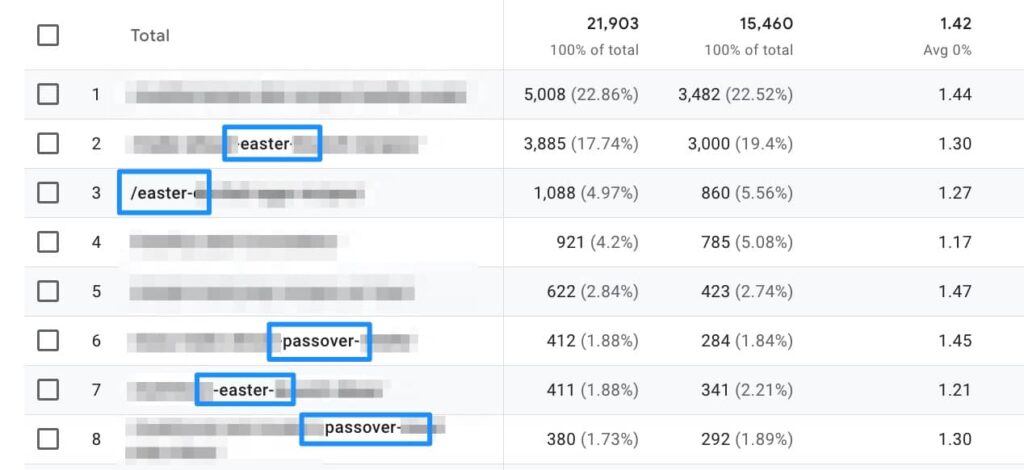
That’s not a typo. Just over one-third of my Pinterest traffic last week came from seasonal content. And it wasn’t because I posted a pin the night before Easter.
This was planned out months in advance.
Quick Navigation
What I Did
Back in January and February, I published 28 articles across a range of Easter and Passover topics.
Yes, 28 is a lot. But I have a team helping with content and design.
The real work happened before content production even began. In December, I spent a morning researching all of the various “holidays” in 2025, and mapping out my content plan.
I used PinClicks to find Pinterest-specific keywords that met two criteria:
- High search interest leading up to the holiday
- Low to moderate competition
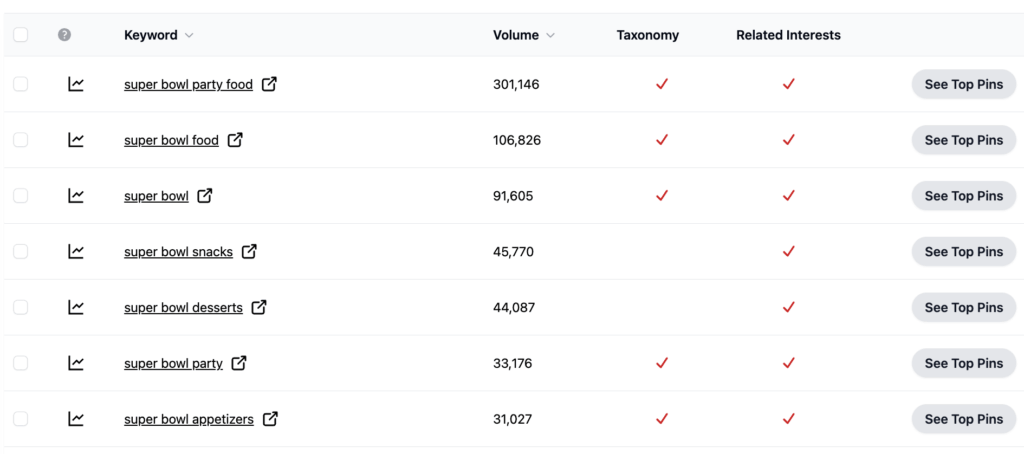
I will typically start in “Keyword Explorer” with a broad search, and then start to sharpshoot specific topics and keywords that I see. You can see estimated search volume, so you know which keywords have high search interest. Here’s an example from a different “seasonal holiday”:
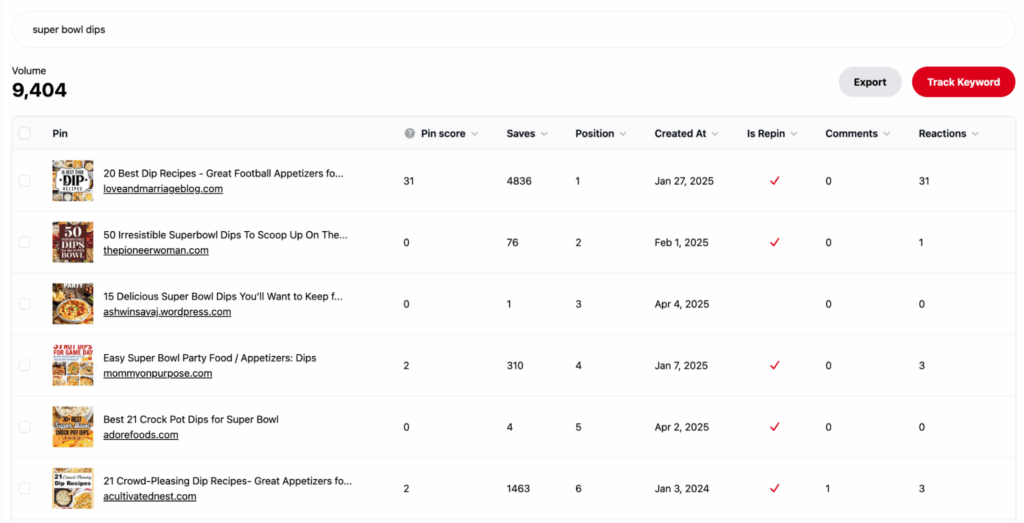
To do that, I’ll click on the “Top Pins” for a specific keyword, and get insights into what is ranking on Pinterest. Just like analyzing page one of the SERPs, if you’re doing SEO.
PinClicks lays out the Top Pins section a lot like I’m used to in analyzing SERPs from tools like Ahrefs. So, I can quickly see if there is good opportunity in the competition.
FYI, PinClicks has a free trial if you want to give it a try yourself.
The goal wasn’t to write generic “Easter recipes” posts that every major publisher already dominates. I was looking for specific topics people were searching for that didn’t yet have a lot of high-quality pins or content built around them.
Ok, back to what I did in January and February. Once I had the list, we started building out the content and designed Pinterest-optimized pins for the articles.
I learned Pinterest from Tony Hill, and he has a free Masterclass that you can take if you want to learn more about his approach. He drives over a million monthly clicks to his sites from Pinterest, and his free course shows how to do it yourself, including the top ranking factors, best-performing content types, and how to make any niche work on Pinterest.
What Happened
By the time the week before Easter rolled around, those pins were ranking and circulating.
Traffic from Pinterest jumped. But more interesting is that it was concentrated. 35% of the traffic from last week came from those 28 articles that were focused on Easter and Passover topics.
This isn’t a one-time fluke either. I’ve seen similar patterns around other holidays – last year, I shared about noticing this over Thanksgiving. That was a lot less planned, but was the impetus for taking a more focused approach to seasonal content this year.
The Easter spike was one of the clearest signals yet that Pinterest rewards well-timed, seasonally aligned content.
What This Means Going Forward
For what it’s worth, I understand what you might be thinking. 28 articles for a week or two of traffic. Is the juice worth the squeeze here?
Long term, I’m not sure. I’ll evaluate after utilizing this approach for a full year. For now, I’m excited that I have a process that is consistently working for traffic generation (multiple holidays in a row now). Plus, keep in mind that these articles can be updated for next year and years following.
Traffic is hard to come by these days, so I’m not going to sleep on it.
Pinterest is one of the few platforms that still allows small-to-mid-sized publishers to generate consistent, meaningful traffic – especially when you’re strategic about timing.
The takeaway here is straightforward:
- Seasonal content works on Pinterest
- It needs to be published well in advance (8–12 weeks is ideal I’ve found)
- Keyword research matters – PinClicks has been key here
- Volume isn’t everything, but targeting multiple subtopics increases your chances of hitting
I’ll be repeating this approach for:
- Mother’s Day
- Graduation
- Father’s Day
- Fourth of July
…and a few others.
The process will stay the same: keyword research → article creation → pin design → early publishing. Then, wait.
Final Note
This didn’t drive a record-breaking month. But it did lead to a measurable traffic boost during a short time period, driven by content that was built specifically for that window.
And in a world where SEO is less predictable and social platforms are hit or miss, I’ll take a 35% bump from planned content every time.
If you haven’t started your next seasonal cluster yet, now is a good time. Mother’s Day is coming up! And, if you’re looking to up your overall Pinterest game, give Tony’s Free Masterclass a watch!